
Testicular Biopsy
A testicular biopsy is a simple, minimally invasive medical procedure that allows sperm to be retrieved directly from the testicle or the epididymis when sperm cannot be found in the semen sample.
At GAIA Fertility Clinic, we perform this procedure with safety, medical precision, and close support and guidance, because behind every technique lies a journey to parenthood that deserves care, respect, and compassion.
What Is a Testicular Biopsy?
A testicular biopsy is a minor surgical procedure indicated in cases of male infertility in which sperm is not detected in the ejaculation or are not viable.
Its purpose is to retrieve sperm directly from the male reproductive system so that they can later be used in an assisted reproduction treatment.
How Is a Testicular Biopsy Performed?
A testicular biopsy is performed under local anesthesia, without the need for hospital admission.
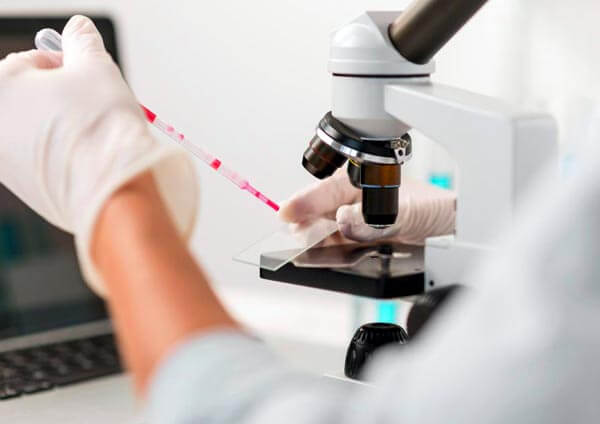
Through a precise needle aspiration, small samples are obtained and immediately analyzed in the laboratory. If viable sperm are identified, they may be:
- Used in the same treatment cycle.
- Cryopreserved for future use.
In most cases, the retrieved sperm are used in ICSI fertilization (Intracytoplasmic Sperm Injection), a technique that maximizes the chances of success.
Types of Testicular Biopsy: TESA and PESA
There are two main sperm retrieval techniques, selected according to the cause of infertility and the patient’s medical history. Both procedures are outpatient treatments with a rapid recovery time.
TESA (Testicular Sperm Aspiration)
TESA consists of the direct retrieval of sperm through a needle aspiration from the testicle. It is a quick, effective, and widely used technique in cases of azoospermia.
PESA (Percutaneous Epididymal Sperm Aspiration)
PESA enables sperm retrieval from the epididymis, the duct where sperm are stored after production. It is mainly indicated when there is an obstruction of the vas deferens or following a vasectomy.
When Is a Testicular Biopsy Recommended?
The indication for the procedure is always made following a complete male fertility assessment. A testicular biopsy is particularly recommended in the following cases:

Azoospermia – complete absence of sperm in the semen.

Necrospermia – presence of non-viable sperm.

Obstruction of the seminal ducts or a previous vasectomy.

Severe sperm quality abnormalities.
Frequently Asked Questions About Testicular Biopsy
A testicular biopsy is performed under local anesthesia or, in some cases, sedation. During the procedure, the patient does not feel pain, although a slight sensation of pressure or mild discomfort may occur.
After the procedure, it is common to experience mild discomfort or a feeling of swelling in the area, which disappears within a few days.
In most cases, preparation is simple. Fasting may be recommended if the procedure is performed under sedation, along with basic hygiene instructions or avoiding certain medications.
The medical team will always provide personalised instructions before the procedure.
Rest is recommended during the first 24–48 hours. After this period, most patients can gradually return to their normal activities.
It is advisable to avoid intense physical exertion and sexual activity for a few days to ensure proper recovery.
This is a safe technique, although, like any medical procedure, it may involve side effects, which are usually uncommon.
The most frequent effects include mild discomfort, swelling, or small bruises in the area. Complications are rare.
Book your no-obligation consultation
At GAIA, we understand testicular biopsy not only as a medical procedure, but as a real opportunity to open new reproductive possibilities when the path to parenthood seems to have come to a standstill.
Our team supports you every step of the way, with clear information, shared decision-making, and a human-centred approach that cares for both the medical and emotional aspects.
At GAIA, we understand testicular biopsy not only as a medical procedure, but as a real opportunity to open new reproductive possibilities when the path to parenthood seems to have come to a standstill.
Our team supports you every step of the way, with clear information, shared decision-making, and a human-centered approach that cares for both the medical and emotional aspects.