
Endometrial Receptivity Test
The endometrial receptivity test is an advanced diagnostic tool designed to identify the precise moment when the endometrium is optimally prepared to receive an embryo.
Its purpose is to personalise embryo transfer timing and help optimise the timing of embryo transfer and support implantation outcomes.
What Is Endometrial Receptivity?
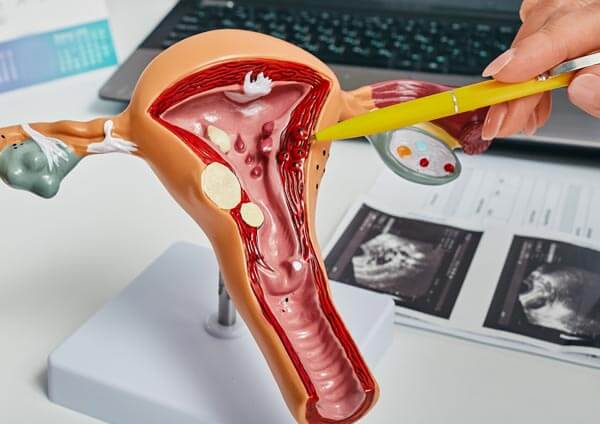
The endometrium is a dynamic tissue that undergoes continuous changes throughout the menstrual cycle. There is a limited time period during which the endometrium reaches its optimal state for embryo implantation. This period is known as the Window of Implantation (WOI).
In most women, the implantation window occurs approximately between days 19 and 21 of the menstrual cycle, around seven days after the luteinising hormone (LH) surge. However, in a significant proportion of patients, the implantation window may be displaced, meaning that the endometrium becomes receptive earlier or later than expected.
When this occurs, embryo transfer may not coincide with the optimal implantation period, potentially reducing the likelihood of successful implantation.
What Is the Endometrial Receptivity Test Used For?
The Endometrial Receptivity Test can help to:
- Determine whether the endometrium is receptive on a specific day.
- Identify a displaced implantation window.
- Schedule embryo transfer at the optimal time for implantation.
- Reduce the risk of recurrent implantation failure.
The test does not modify the endometrium itself. Instead, it provides valuable information about when embryo transfer is most likely to be successful.
When Is the Endometrial Receptivity Test Recommended?
The test is not routinely recommended for all patients. Instead, it is used selectively when it is likely to provide clinically relevant information that may influence treatment planning and influence treatment planning and support clinical decision-making.
At GAIA Fertility Clinic, the Endometrial Receptivity Test is used as a precision diagnostic tool and forms part of a comprehensive assessment of both endometrial health and the overall reproductive process. The Endometrial Receptivity Test is particularly recommended in the following situations:

Recurrent implantation failure.

Recurrent miscarriage without a clear cause.

Failure to achieve pregnancy despite the transfer of good-quality embryos.

Previous embryo transfers that were technically successful but did not result in pregnancy.
How Is the Endometrial Receptivity Test Performed?
The procedure is carried out through an endometrial biopsy during a carefully controlled treatment cycle. The process involves the following steps:
- The endometrium is prepared in a similar way to an embryo transfer cycle.
- A small sample of endometrial tissue is collected.
- The sample is analysed to determine its receptivity profile.
- The results are used to plan a fully personalised embryo transfer schedule.
By identifying the individual timing of endometrial receptivity, fertility specialists can tailor embryo transfer to each patient’s specific biological profile.
Frequently Asked Questions About the Endometrial Receptivity Test
No. The Endometrial Receptivity Test is not considered a routine fertility investigation.
It is generally recommended only in specific circumstances, such as recurrent implantation failure or recurrent miscarriage without an identifiable cause.
For patients with no previous fertility treatment history or implantation issues, the test may not provide additional clinically useful information.
The decision to perform the test is always based on an individual assessment of each patient’s medical history and reproductive circumstances.
The test is performed through an endometrial biopsy.
This is a short outpatient procedure that may cause mild to moderate discomfort similar to menstrual cramps. Most patients tolerate the procedure well.
Hospital admission is not required, and anaesthesia is generally unnecessary.
Your fertility specialist may recommend taking a mild pain reliever before the procedure if appropriate.
The test is carried out during a carefully controlled cycle designed to replicate the hormonal conditions of an embryo transfer cycle.
It is performed on a specific day that is subsequently correlated with the laboratory analysis.
This allows fertility specialists to determine whether the endometrium is receptive at that particular moment and, if necessary, identify the precise timing of the patient’s individual implantation window.
No. The Endometrial Receptivity Test does not guarantee pregnancy.
However, it can help optimise one of the most important factors influencing implantation: the timing of embryo transfer.
Successful pregnancy also depends on a variety of other factors, including:
- Embryo quality.
- Chromosomal normality of the embryo.
- Maternal age.
- Uterine health.
- Overall reproductive factors.
For this reason, the test should be viewed as one component of a personalised fertility strategy rather than a guarantee of treatment success.

Request Your Appointment with No Obligation
At GAIA Fertility, we believe that successful fertility treatment depends on understanding every aspect of the reproductive process. The Endometrial Receptivity Test provides valuable insight into the timing of implantation and allows embryo transfer to be tailored to each patient’s unique biological profile.
At GAIA Fertility, we believe that successful fertility treatment depends on understanding every aspect of the reproductive process. The Endometrial Receptivity Test provides valuable insight into the timing of implantation and allows embryo transfer to be tailored to each patient’s unique biological profile.