Egg Donation: IVF with Donor Eggs

Egg donation, also known as IVF with donor eggs, is a fertility treatment that may be considered when a patient’s own eggs are unlikely to result in a pregnancy or when there are medical reasons to use eggs from a donor.

At GAIA fertility clinic, we assess every case individually and support patients throughout each stage of treatment, from the initial assessment to embryo transfer and follow-up care.

Two-Blastocyst Guarantee Programme

A programme designed to provide greater reassurance throughout treatment, under the terms and conditions established by GAIA.
Specialist Assisted Reproduction Laboratory

We use specialised laboratory technology and expertise to support fertilisation and embryo development.

Treatment Tailored to You

Personalised medical assessment to identify the most suitable fertility treatment based on your medical history and individual needs.
What is egg donation IVF?

Egg donation involves IVF using eggs from a donor. The eggs are fertilised in the laboratory with sperm from a partner or a sperm donor, and the resulting embryos may then be transferred to the recipient’s womb.

IVF with donor eggs may be an option when a patient’s own eggs are insufficient in number or quality, in cases of ovarian failure, or where there are other medical circumstances for the specialist team to consider. Whether it is suitable depends on the patient’s medical history, diagnostic tests and preferences.

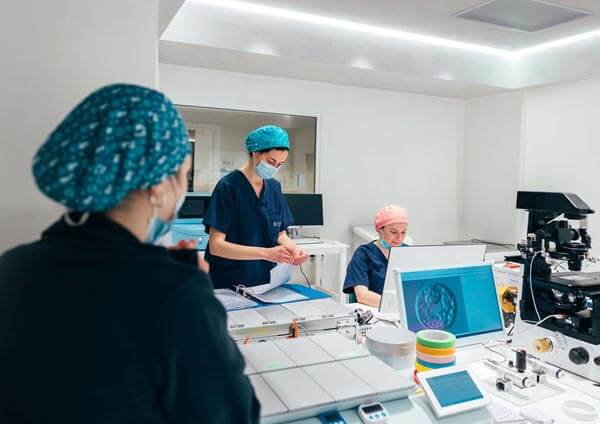
Embriólogas de GAIA trabajando en un tratamiento de ovodonación

What are the benefits of egg donation?

Egg donation offers another route to fertility treatment when a patient’s own eggs are not suitable for achieving a pregnancy. It may also provide options in certain clinical and genetic circumstances, following assessment by the medical team.

An option when using your own eggs is unlikely to be successful

It can make fertility treatment possible when the chances of achieving a pregnancy with your own eggs are low.

An option in certain genetic risk situations

In specific circumstances, donor eggs may help reduce the risk of passing on certain maternal-origin genetic conditions.

Treatment tailored to your circumstances

The treatment plan is based on each patient’s clinical circumstances, aiming to identify the most appropriate approach for their needs.

Medical and emotional support

Professional guidance can help answer questions, explain the implications of using donor eggs, and support patients as they make informed decisions about treatment.

How do we select egg donors at GAIA fertility clinic?

At GAIA fertility clinic, we follow a strict and highly controlled donor selection process to ensure maximum safety and compatibility. All egg donors undergo:

We also use our RDRP system (Right Donor for the Right Patient). This is an advanced donor selection and matching protocol used in assisted reproduction clinics to identify the most suitable donor for each recipient, taking into account physical resemblance and genetic and immunological compatibility.

Donors are selected according to medical criteria and applicable legal requirements. Our team carefully reviews the available information to match each recipient with a suitable donor.

When may egg donation be recommended?

Egg donation may be recommended when pregnancy cannot be achieved using a patient’s own eggs or when there is a high risk of passing on genetic conditions. This fertility treatment can offer high success rates in certain circumstances, although suitability must always be assessed on an individual basis. Egg donation is not the right approach for every patient.

IVF with donor eggs may be considered in a range of circumstances, following an individual medical assessment. These may include:

Low ovarian reserve

IVF with donor eggs may be considered when the chances of achieving a pregnancy using a patient’s own eggs are low, as can occur in some cases of low ovarian reserve.

Advanced maternal age

May be recommended for women of advanced maternal age, when egg quality has declined.

Repeated implantation failure

May be recommended for patients who have experienced repeated implantation failure or problems with embryo development following IVF treatment using their own eggs.
Iconop estudio genético

Genetic conditions

Egg donation may be recommended when there is a risk of passing on genetic conditions.

icono de un útero

Egg abnormalities

For patients with severe egg abnormalities that prevent fertilisation or normal embryo development.

icono de un útero

Ovarian failure

IVF with donor eggs may be considered when the chances of achieving a pregnancy using a patient’s own eggs are low, depending on age and medical assessment.
What are the chances of getting pregnant with egg donation?

Egg donation is one of the fertility treatments with the highest pregnancy success rates, exceeding 70% in many cases. This is because the eggs come from young donors and are of good quality, which significantly improves the chances of achieving a pregnancy.

60 %

*Results are indicative and may vary depending on the recipient’s age, the condition of the womb, embryo quality and other individual clinical factors.

GAIA Egg donation programme

Our Two-Blastocyst Guarantee Programme guarantees that at least two embryos will reach the blastocyst stage (day 5).
The cumulative success rate can reach up to 70%, offering a well-established treatment option for women seeking greater reassurance during their fertility journey.

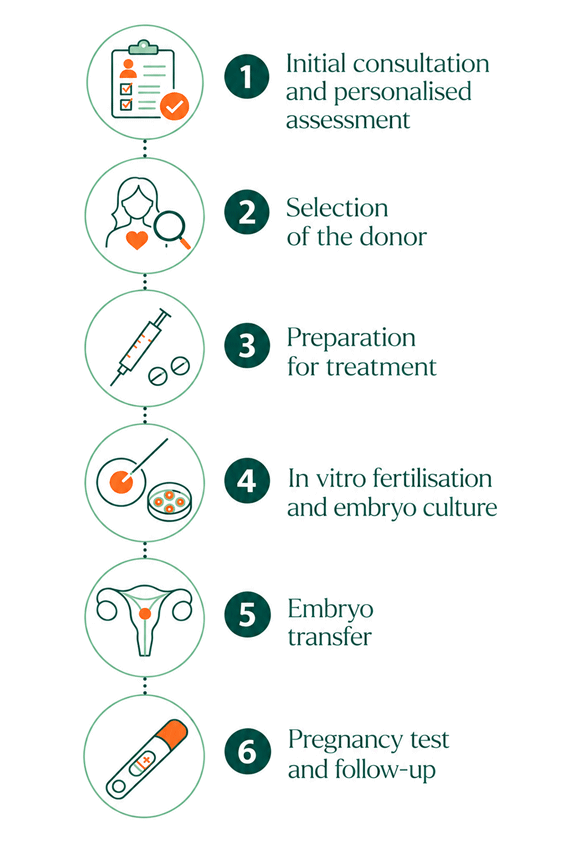
How does egg donation work, step by step?

How does egg donation work, step by step?

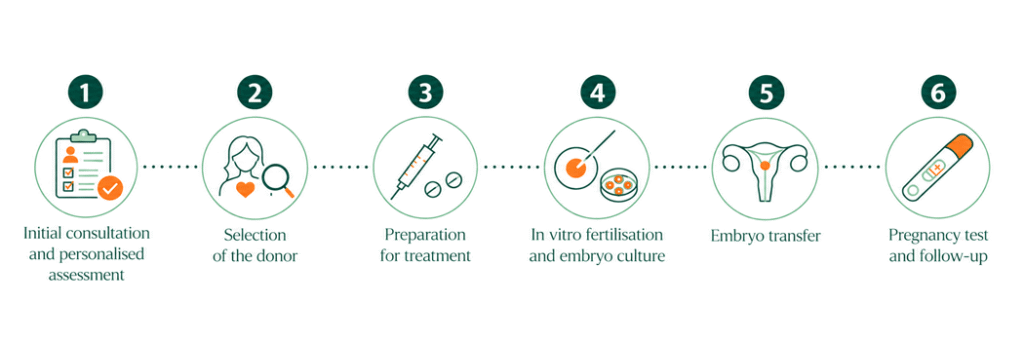
The egg donation uses eggs from a donor to help achieve pregnancy. The process is tailored to each patient’s individual needs. It involves several stages, from the initial medical assessment and donor selection to endometrial preparation, in vitro fertilisation, embryo transfer, and pregnancy follow-up.

Infographic on egg donation
Embrióloga en laboratorio GAIA realizando una fecundación in vitro

At your first appointment, we carry out a full gynaecological assessment, an ultrasound scan and any specific tests required. This appointment helps us identify the most appropriate treatment and answer your medical questions.

It is also an opportunity to learn about the different stages of treatment, review your medical history and discuss your expectations, the options available and the support you can receive throughout the process.

The donor is selected through a protocol that considers medical criteria and relevant characteristics for matching.

At GAIA, our RDRP system helps us select a suitable donor for each patient, taking physical resemblance and medical compatibility criteria into account.

RDRP is an internal donor selection protocol that combines different criteria to guide donor allocation according to each patient’s characteristics. As part of this process, the clinic assesses phenotypic resemblance and genetic and immunological compatibility in line with its medical protocol, with the aim of providing personalised treatment suited to each case.

While the donor undergoes ovarian stimulation, the recipient follows the endometrial preparation plan recommended by the medical team. The aim is to prepare the womb lining for a possible embryo transfer.

Medication and timing are tailored to each patient. The team explains how to take the medication, which monitoring appointments are needed and what to do if questions or side effects arise.

The donated eggs are fertilised using IVF or ICSI, depending on the medical recommendation. The embryos are then cultured in the laboratory so that their development can be assessed.

If development allows, embryos may reach the blastocyst stage, usually around day five or six of culture. Embryo development and the number of embryos obtained vary from one cycle to another.

Embryo transfer involves placing an embryo in the womb using a fine catheter, usually with ultrasound guidance. It is an outpatient procedure and does not usually require an anaesthetic.

The recommended number of embryos to transfer is decided according to the patient’s clinical circumstances and the applicable regulations. Patient safety is the priority, and the aim is to reduce the risk of a multiple pregnancy wherever possible.

A pregnancy test is carried out using a blood test to measure beta-hCG, on the date advised by the medical team.

If the result is positive, ultrasound scans are arranged to check the early progress of the pregnancy. A positive result alone cannot guarantee that the pregnancy will continue to develop.

How much does egg donation or IVF with donor eggs cost?

The cost of egg donation IVF can vary depending on several factors, including the type of donation programme, endometrial preparation, medication requirements, and any additional testing needed to ensure the highest levels of safety and treatment success.

At GAIA fertility clinic, we approach egg donation from both a medical and human perspective. Every patient has a unique story, which is why the first step is always a personalised fertility assessment, allowing our specialists to recommend the treatment best suited to your reproductive needs.

Following your evaluation, you will receive a fully transparent, personalised treatment plan and quotation, with clear information to help you make decisions with confidence and peace of mind.
We also offer flexible financing options to make fertility treatment more accessible.

What does egg donation treatment include?

Depending on the agreed programme and medical recommendation, treatment may include:

What types of egg donation are available?

Egg donation may be carried out using sperm from a partner or from a sperm donor, depending on the clinical circumstances and the patient’s plans for having a family. In some cases, double donation, using both donor eggs and donor sperm, may also be considered. The medical team will explain which options may be suitable.

Egg donation using a partner’s sperm

The eggs come from a donor and are fertilised using a sperm sample from the patient’s partner, if clinically appropriate.

Egg donation using donor sperm

This may be considered where there is a medical indication or where it forms part of the patient’s or couple’s plans for having a family.

Double donation

This involves using eggs from an egg donor and sperm from a sperm donor. Suitability is assessed on an individual basis.

Flexible Financing for Your Fertility Treatment

Spread the cost of your fertility treatment over up to 12 months interest-free, with the option to include medication and no need to switch banks.

Frequently asked questions about egg donation

The answers to these frequently asked questions have been prepared by the editorial team at GAIA Fertility Clinic and medically reviewed by Dr. Grether Pérez to ensure the information is accurate, up to date, and based on scientific evidence.

Egg donation treatment usually takes around four to six weeks, from the start of endometrial preparation to embryo transfer.

During this time, the donor’s ovarian stimulation is coordinated with preparation of the recipient’s womb. The pregnancy test is carried out around 10 days after the embryo transfer.

The exact timing can vary depending on the medical protocol and each patient’s individual needs.

With egg donation, the egg comes from a donor, so some of the embryo’s genetic material comes from her. The medical team selects the donor according to the programme’s criteria and the current legal framework.

During pregnancy, the womb environment can influence certain aspects of development, but epigenetics cannot predict or guarantee the baby’s physical features. If you have concerns about this, you can discuss them with the medical team.

In Spain, egg donation is anonymous and altruistic, so the donor’s identity is not disclosed to the recipient. The non-identifying information that can be shared depends on the relevant regulations and the clinic’s procedures.

The team can explain what medical and general information is available in your case without revealing details that could identify the donor.

Once a donor has been allocated by the laboratory, each recipient will have between 8 and 10 mature eggs available, to obtain two blastocysts for transfer.

Although our laboratory’s blastulation rates are high, patients will be given a guarantee of the opportunity to have two embryo transfers.

In Spain, egg donation is anonymous and altruistic, so the donor’s identity is not disclosed to the recipient. The non-identifying information that can be shared depends on the relevant regulations and the clinic’s procedures.

The team can explain what medical and general information is available in your case without revealing details that could identify the donor.

Potential donors undergo medical assessments and laboratory tests to assess their health and suitability for donation, in accordance with the clinic’s protocols and current regulations.

The tests may include genetic screening, blood tests and screening for infections. The medical team can explain which tests are carried out as part of GAIA’s programme and whether any additional genetic compatibility testing is recommended.

The egg provides the donor’s DNA, while the sperm provides DNA from the partner or sperm donor.

Epigenetics studies the mechanisms that regulate gene activity; it does not change inherited DNA or make it possible to guarantee a physical resemblance.

During pregnancy, the womb environment plays a part in embryonic and foetal development.

The main difference between egg donation and conventional IVF lies in the origin of the eggs.

In egg donation treatment, eggs from a donor are used, whereas conventional IVF uses the patient’s own eggs. Egg donation often offers higher success rates, particularly in cases of low ovarian reserve or advanced maternal age.

REAL PATIENT STORIES

Stories that inspire us every day

Behind every fertility treatment is a unique story. These are just some of the families whose dreams have become a reality thanks to GAIA.

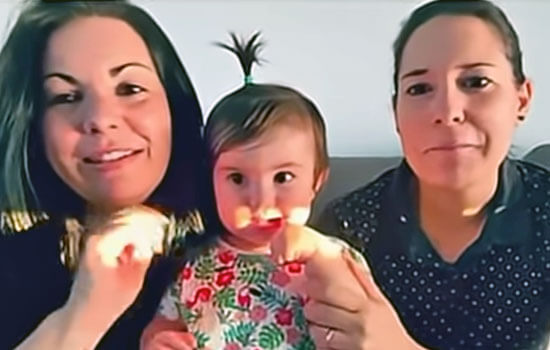
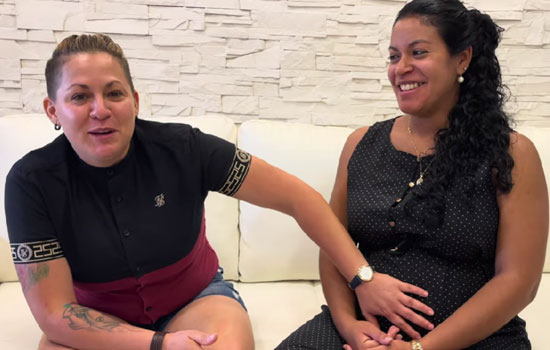
Cristina y Belinda, madres mediante método ROPA

Thanks to Clínica GAIA, we were able to build our family. From the moment we walked through the door, we felt completely at ease. We received exceptional care throughout, and the team made us feel right at home. They are highly professional and genuinely caring.
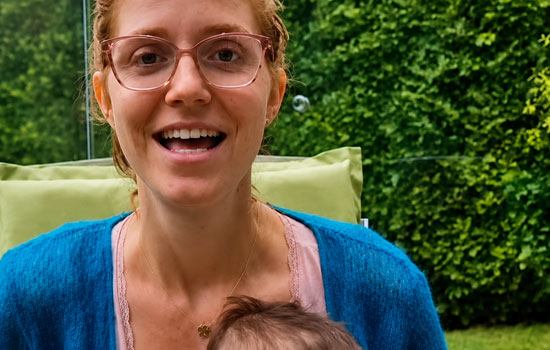
Cristina & Belinda

ROPA Method

After several unsuccessful treatment cycles at other clinics, I contacted Clínica GAIA. In my case, I needed egg donation treatment. From the very beginning, we felt supported, well informed and genuinely cared for. Every step of the process was explained clearly, and we always felt we were in safe and experienced hands.
Georgina

Egg Donation

We had always dreamed of becoming mothers and were looking for a clinic with a warm, family-centred approach. Our experience has been wonderful from the very first moment we walked through the doors. Even from our first phone call, we felt the warmth and kindness we had been searching for.

Marta & Adriana

Intrauterine Insemination

470 verified reviews on Doctoralia

The experience of our patients is reflected in the reviews published on Doctoralia.

Book your free initial consultation

At GAIA fertility clinic, egg donation is more than a medical treatment. It is a deeply personal journey.
Take the first step towards growing your family with a personalised fertility consultation at Gaia Fertility.

Name and Surname
Casillas de verificación

At GAIA fertility clinic, egg donation is more than a medical treatment. It is a deeply personal journey.
Take the first step towards growing your family with a personalised fertility consultation at Gaia Fertility.