
In vitro fertilisation (IVF)
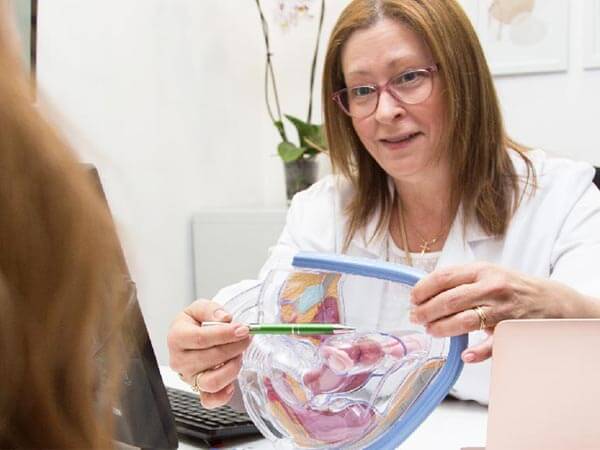
In vitro fertilisation (IVF) is a fertility treatment in which eggs are fertilised in a laboratory using sperm from a partner or a donor. At Clínica GAIA, we assess each case individually and support you throughout every stage of treatment.

High success rates
An assisted conception strategy that allows us to assess the chromosomes of embryos before they are transferred.

Advanced laboratory technology
We assess reproductive health and each partner’s individual circumstances to help guide treatment decisions.

Treatment tailored to you
A personalised medical assessment to develop the reproductive treatment plan best suited to your circumstances.

Table of contents
What is in vitro fertilisation (IVF)?
In vitro fertilisation (IVF) is a fertility treatment in which eggs are collected from the ovaries and fertilised in a laboratory using sperm from a partner or a donor.
Following fertilisation, the embryos are cultured for several days and their development is assessed. When clinically indicated and conditions allow, an embryo is transferred into the uterus in an attempt to achieve a pregnancy.
At our fertility clinic in Sabadell, our medical team considers your medical history, age and ovarian reserve, among other factors, to recommend the most appropriate treatment for your individual circumstances.
Types of in vitro fertilisation
Different IVF treatment options may be recommended depending on each patient’s clinical profile and reproductive needs.
- Using your own eggs and your partner’s sperm.
- Treatment with donor sperm.
- Using donor eggs and your partner’s sperm.
- Treatment for female couples and single women.
When might in vitro fertilisation be recommended?
In vitro fertilisation (IVF) may be recommended in various cases of infertility or when other fertility treatments have not achieved the expected results. The decision depends on the patient’s medical history, fertility test results and the circumstances of the individual or couple. An individual medical assessment is therefore important to determine the most appropriate treatment.

Low ovarian reserve
IVF may be considered for women with low ovarian reserve or a limited ovarian response, depending on their age and fertility assessment.

Blocked fallopian tubes
When the fallopian tubes are blocked or damaged, IVF may be an option for achieving pregnancy.

Sperm abnormalities
In certain cases involving abnormalities in sperm concentration, motility or morphology, IVF may be recommended, with or without ICSI.

Endometriosis
For women with endometriosis, IVF may be considered depending on the severity of the condition, age, reproductive circumstances and other clinical factors.

Unexplained infertility
When no specific cause of infertility can be identified, IVF may be considered based on the investigations carried out and any previous treatments.
Unsuccessful previous insemination cycles
If pregnancy has not been achieved after one or more cycles of artificial insemination, IVF may be considered depending on the circumstances of each case.
Embryo genetic testing
When there is a medical indication for genetic testing of embryos, IVF with preimplantation genetic testing (PGT) may be considered.

Female couples and solo motherhood
Female couples and women who wish to become mothers on their own can access fertility treatments using donor sperm. The most appropriate technique depends on their individual circumstances.
What are the chances of pregnancy with IVF?
IVF success rates can vary depending on factors such as the woman’s age, ovarian reserve, embryo quality, and the treatment approach used. In general, pregnancy rates tend to be higher in women under the age of 35 and may gradually decline with age, particularly after the age of 38 to 40.
As a general guide, IVF/ICSI offers high pregnancy rates. In selected cases, success rates may reach up to 89% when treatment is combined with preimplantation genetic testing (PGT), as this technique allows chromosomally viable embryos to be identified before transfer.
At GAIA, we assess each case individually to recommend the most appropriate treatment. During your free initial consultation, we will assess your circumstances, explain the available options, and discuss your chances of pregnancy based on your individual situation.
IVF with preimplantation genetic testing (PGT)
*Estimated cumulative rate in selected patients undergoing IVF with PGT.
IVF with ICSI
*Estimated rate in patients undergoing IVF with the ICSI technique.
The results are for guidance only and may vary depending on age, ovarian reserve, embryo quality and other individual clinical factors.
IVF techniques
Conventional IVF
In conventional IVF, the egg is placed in a culture dish together with the sperm sample, allowing fertilisation to occur naturally.
ICSI technique
In IVF using the ICSI technique, the embryologist selects the sperm with the highest fertilisation potential and injects them directly into each egg through microinjection.
What are the stages of the IVF process?
The in vitro fertilisation (IVF) process involves several stages, from the initial medical assessment and ovarian stimulation to fertilisation in the laboratory, embryo transfer and the pregnancy test. The duration and specific details of treatment depend on each patient’s medical and reproductive circumstances. Embryo transfer may also take place in a fresh cycle or during a subsequent cycle, depending on the medical team’s assessment.
Initial medical assessment
During the first consultation, we perform a vaginal ultrasound to assess follicular reserve, uterine anatomy, and the condition of the fallopian tubes. We also request comprehensive blood tests for both partners, together with a semen analysis.
With all this information, we gain a precise understanding of the starting point and can design a fully personalised treatment plan, adapted to each patient’s medical and reproductive needs.
Ovarian stimulation
Ovarian stimulation begins with the medication regimen prescribed for each patient. It involves hormone medication and ultrasound scans to monitor the ovarian response and adjust the treatment when necessary.
Egg retrieval
Once the follicles reach the appropriate size (approximately 17 mm), we schedule the egg retrieval procedure.
It is a brief, painless procedure performed under light sedation. After the retrieval, you will rest in a private room before discharge.
Fertilisation and embryo culture
In our laboratory, eggs are fertilised using partner or donor sperm through either conventional IVF or ICSI, depending on each case.
We use advanced techniques such as MACS, IMSI, or FERTILE CHIP to select sperm with the best characteristics.
Embryos are cultured for 5 to 6 days in specialised incubators that allow continuous environmental monitoring.
Embryo transfer
At GAIA, embryo transfer is usually carried out at the blastocyst stage, between days 5 and 6 of development. The timing of the transfer and the choice of embryos are tailored to each patient’s circumstances and the medical team’s assessment.
Fresh or frozen embryo transfer
Depending on endometrial preparation and the stage of the cycle, embryo transfer can take place:
- Fresh transfer: a few days after egg collection.
- Frozen embryo transfer (FET): in a subsequent cycle, either a medicated or natural cycle, when the endometrium is in optimal condition.
Embryo cryopreservation
Remaining good-quality embryos are vitrified for future attempts, avoiding the need to repeat the entire ovarian stimulation and egg retrieval process.
Pregnancy test and follow-up
Approximately 10 days after embryo transfer, we perform a blood pregnancy test (beta hCG).
If the result is positive, follow-up ultrasounds are scheduled to confirm an ongoing pregnancy before referring you back to your usual specialist.
How much does IVF treatment cost?
The cost of IVF treatment may vary depending on each individual’s medical characteristics and needs. There is no standard price, as different factors are involved, including the most appropriate technique, medication requirements, diagnostic tests, or the need for complementary procedures.
At GAIA fertility clinic, we understand that every patient has a unique story. For this reason, the most appropriate fertility treatment always begins with an individualised medical assessment. Our specialized team will carefully evaluate your case to guide you clearly, honestly, and transparently, recommending the most suitable option for you.
Following this evaluation, we will provide a detailed personalised quote, with all the information you need to make your decision with confidence. We also offer different financing options tailored to your needs.
What does the treatment include?
- Initial consultation
- Ultrasound monitoring
- Egg retrieval procedure
- IVF / ICSI
- Embryo culture
- First embryo transfer
- Pregnancy test (beta hCG)
- Two follow-up ultrasounds
- Embryo vitrification
Flexible Financing for Your Fertility Treatment
Spread the cost of your fertility treatment over up to 12 months interest-free, with the option to include medication and no need to switch banks.
Frequently asked questions about IVF
The answers to these frequently asked questions have been prepared by the editorial team at GAIA Fertility Clinic and medically reviewed by Dr. Grether Pérez to ensure the information is accurate, up to date, and based on scientific evidence.
How long does treatment take?
A complete IVF cycle usually lasts between 4 and 6 weeks, from the start of ovarian stimulation to the pregnancy test.
If a frozen embryo transfer is required, the process may take a few additional weeks, although it is generally lighter and does not require egg retrieval.
Is there a limit to the number of attempts?
There is no fixed maximum number of IVF attempts. Treatment can be repeated as long as there is an appropriate medical indication and the patient is in suitable condition to continue.
In practice, the number of attempts depends on factors such as age, ovarian response, embryo quality, and the progression of each case. After several unsuccessful attempts, the medical team evaluates the best strategy on an individualised basis.
What are the chances of success with IVF?
Success rates always depend on each individual case.
They are particularly influenced by the woman’s biological age, semen analysis results, any genetic background, and the presence of chronic, immunological, or clotting disorders, whether previously diagnosed or not.
All of these factors are key when assessing treatment success probabilities. At Gaia, we believe in presenting each patient’s chances clearly and transparently after careful evaluation and before treatment begins.
How many embryos are transferred?
For couples undergoing assisted reproduction treatment, the ultimate goal is to have one healthy baby at home.
The risks associated with multiple pregnancy may compromise pregnancy outcomes. Therefore, our recommendation will always be to transfer a single embryo.
What are the differences between IVF, ICSI, and artificial insemination?
In IVF, eggs are retrieved from the ovaries and fertilised with sperm in the laboratory. Once an embryo is obtained, it is transferred to the uterus to support pregnancy.
In the ICSI technique, the embryologist injects a single sperm directly into the egg. It is generally recommended in cases of male factor infertility, poor semen quality, or previous fertilisation failures.
Artificial insemination is a simpler and less invasive treatment in which sperm are placed directly into the uterus during ovulation, allowing fertilisation to occur naturally inside the woman’s body.
What tests are required before IVF?
Before starting IVF treatment, several fertility tests are required to establish the most appropriate protocol for each patient. The most common include:
- Hormone testing to assess ovarian reserve.
- Gynecological ultrasound.
- Antral follicle count.
- Semen analysis and sperm testing.
- Serology and general blood work.
- Assessment of the uterus and fallopian tubes if required.
- Genetic or immunological testing in specific cases.

Medical content reviewed by Dr Grether Pérez.
Last updated: October 16, 2026.

REAL PATIENT STORIES
Stories that inspire us every day
Behind every fertility treatment is a unique story. These are just some of the families whose dreams have become a reality thanks to GAIA.
Thanks to Clínica GAIA, we were able to build our family. From the moment we walked through the door, we felt completely at ease. We received exceptional care throughout, and the team made us feel right at home. They are highly professional and genuinely caring.
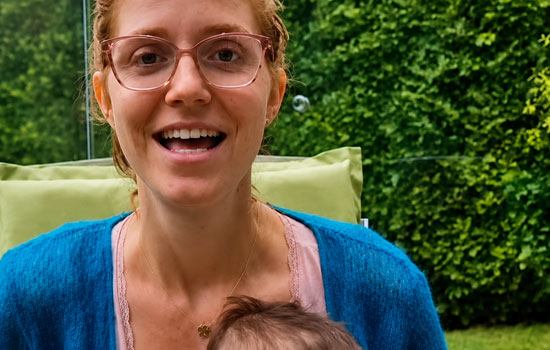
Cristina & Belinda
ROPA Method
After several unsuccessful treatment cycles at other clinics, I contacted Clínica GAIA. In my case, I needed egg donation treatment. From the very beginning, we felt supported, well informed and genuinely cared for. Every step of the process was explained clearly, and we always felt we were in safe and experienced hands.

Georgina
Egg Donation
We had always dreamed of becoming mothers and were looking for a clinic with a warm, family-centred approach. Our experience has been wonderful from the very first moment we walked through the doors. Even from our first phone call, we felt the warmth and kindness we had been searching for.

Marta & Adriana
Artificial Insemination
470 verified reviews on Doctoralia
The experience of our patients is reflected in the reviews published on Doctoralia.
Request your free first consultation
At GAIA fertility clinic, we believe assisted reproduction is more than technology. It is about support, listening, and creating a space where you feel safe.
Every IVF treatment is a shared journey with you, respecting your story, your timing, and your emotions.
At GAIA fertility clinic, we believe assisted reproduction is more than technology. It is about support, listening, and creating a space where you feel safe.
Every IVF treatment is a shared journey with you, respecting your story, your timing, and your emotions.