


Egg Donation IVF (IVF with Donor Eggs)
Egg donation IVF, also known as IVF with donor eggs, is a highly effective fertility treatment recommended when a woman’s own eggs are unlikely to offer sufficient chances of achieving a successful pregnancy.
By using eggs from a young, carefully screened donor, egg donation offers high success rates.
What Is Egg Donation IVF?
Egg donation involves performing in vitro fertilisation (IVF) using eggs from an anonymous donor.
The donated eggs are fertilised in the laboratory using sperm from a partner or donor, and the resulting embryos are transferred to the recipient’s uterus.
Egg donation is one of the fertility treatments with the highest pregnancy success rates, as donor eggs come from young women with excellent egg quality.
How Do We Select Egg Donors at GAIA Fertility Clinic?
At Gaia Fertility Clinic, we follow a strict and highly controlled donor selection process to ensure maximum safety and compatibility. All egg donors undergo:
- Comprehensive medical screening.
- Psychological assessment.
- Advanced genetic testing.
- Infectious disease and serological screening, in accordance with current medical regulations.
In addition, through our RDRP matching system, we seek the highest possible level of physical resemblance, genetic compatibility, and immunological matching with the recipient, helping minimise risks and provide greater peace of mind.
Who Is Egg Donation Recommended For?
Egg donation may be recommended when pregnancy with a woman’s own eggs is unlikely to be achieved or when there is a high risk of genetic abnormalities. This assisted reproduction treatment offers high success rates in specific situations that should always be assessed on an individual basis. Egg donation may be recommended in cases such as:
Recommended for women with low ovarian reserve or ovarian failure, when pregnancy cannot be achieved using their own eggs.
Recommended for women of advanced maternal age with reduced egg quality.
Recommended for patients with repeated implantation failure or poor embryo development following IVF treatment using their own eggs.
When there is a risk of passing on genetic disorders.
For patients with severe egg quality abnormalities that prevent fertilisation or proper embryo development.
Egg Donation Success Rates
Egg donation is one of the assisted reproduction treatments with the highest pregnancy success rates, achieving rates of over 70% in many cases. This is because the eggs come from young donors with excellent egg quality, significantly increasing the chances of pregnancy.
At GAIA Fertility Clinic, our egg donation programme is designed to maximise these outcomes, offering guarantees such as the development of blastocyst-stage embryos.
Egg Donation Treatment Step by Step
Initial Consultation & Personalised Fertility Assessment
During your first appointment, we perform a complete gynaecological evaluation, ultrasound scan, and specific fertility tests. This consultation allows our specialists to recommend the most suitable treatment plan while addressing any medical or emotional concerns you may have.
Donor Matching
Through our RDRP matching system, we carefully select the most suitable donor for you, prioritising physical resemblance, genetic compatibility, and immunological factors.
This internal donor selection protocol combines multiple medical criteria to maximise treatment safety and success rates, while offering reassurance throughout the process.
Preparing for Treatment
While the donor undergoes ovarian stimulation, the recipient follows a gentle and well-tolerated hormonal treatment to prepare the endometrium for embryo transfer.
This is generally a comfortable process and significantly less demanding than conventional ovarian stimulation.
IVF Fertilisation & Embryo Culture
Donated eggs are fertilised through IVF or ICSI, and embryos are cultured until Day 5 (blastocyst stage), allowing embryologists to select those with the highest implantation potential.
Embryo Transfer
Embryo transfer is a simple, painless outpatient procedure performed in a calm and supportive environment, with special attention given to the patient’s physical and emotional wellbeing.
Pregnancy Test & Follow-Up
Approximately 10 days after embryo transfer, a blood pregnancy test (β-hCG) is carried out.
If positive, follow-up ultrasound scans are scheduled before medical discharge.
How Much Does Egg Donation IVF Cost?
The cost of egg donation IVF can vary depending on several factors, including the type of donation programme, endometrial preparation, medication requirements, and any additional testing needed to ensure the highest levels of safety and treatment success.
At Gaia Fertility Clinic, we approach egg donation from both a medical and human perspective. Every patient has a unique story, which is why the first step is always a personalised fertility assessment, allowing our specialists to recommend the treatment best suited to your reproductive needs.
Following your evaluation, you will receive a fully transparent, personalised treatment plan and quotation, with clear information to help you make decisions with confidence and peace of mind.
We also offer flexible financing options to make fertility treatment more accessible.
What’s Included in the Egg Donation Treatment?
Your egg donation treatment programme at GAIA Fertility includes:
- Initial fertility consultation and results appointment
- Ultrasound monitoring throughout the cycle
- Semen collection and sperm preparation
- Egg donor treatment and medication
- IVF / ICSI fertilisation
- Embryo culture to Day 5 (blastocyst stage)
- First embryo transfer
- Pregnancy blood test (β-hCG)
- Two follow-up ultrasound scans after a positive pregnancy test
- Embryo vitrification (freezing)
Flexible Financing for Your Fertility Treatment
Spread the cost of your fertility treatment over up to 12 months interest-free, with the option to include medication and no need to switch banks.
Frequently Asked Questions About Egg Donation IVF
The answers to these frequently asked questions have been prepared by the editorial team at GAIA Fertility Clinic and medically reviewed by Dr. Grether Pérez to ensure the information is accurate, up to date, and based on scientific evidence.
Egg donation treatment typically lasts between 4 and 6 weeks, from the beginning of endometrial preparation to embryo transfer.
During this period, the donor’s ovarian stimulation is coordinated with the recipient’s uterine preparation to ensure optimal timing. Following embryo transfer, the pregnancy blood test is usually performed around 10 days later.
The exact timeline may vary depending on the medical protocol and each patient’s individual needs.
Although the baby’s genetic material comes from the donor, epigenetics play a crucial role during pregnancy.
The uterine environment, blood supply, hormones, and lifestyle of the woman carrying the pregnancy can all influence how certain genes are expressed during fetal development.
This means that your body plays an active role in your baby’s development throughout pregnancy, influencing the expression of specific traits.
In Spain, egg donation is anonymous and altruistic, meaning the donor’s identity is never disclosed.However, recipients can access non-identifiable and edically relevant information, including:
- General physical characteristics (ethnic background, skin tone, eye colour, hair colour).
- Approximate donor age.
- Blood group and Rh factor.
- General health information.
- Results of medical, psychological, and genetic screening.
This information helps ensure maximum compatibility, safety, and physical resemblance, always within the legal framework established in Spain.
Once a donor has been assigned by our laboratory team, each recipient is typically allocated between 8 and 10 mature eggs (oocytes), with the aim of achieving at least two blastocysts available for embryo transfer.
Although our laboratory maintains high blastulation rates, Gaia Fertility guarantees patients the opportunity to have two embryo transfers, providing greater reassurance throughout treatment.
The main difference between egg donation and conventional IVF lies in the origin of the eggs.
In egg donation treatment, eggs from a donor are used, whereas conventional IVF uses the patient’s own eggs. Egg donation often offers higher success rates, particularly in cases of low ovarian reserve or advanced maternal age.
REAL PATIENT STORIES
Stories That Inspire Us Every Day
Behind every fertility treatment is a unique story. These are just some of the families whose dreams have become a reality thanks to GAIA.
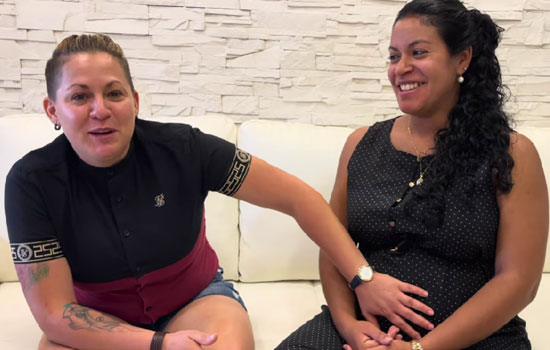
Thanks to Clínica GAIA, we were able to build our family. From the moment we walked through the door, we felt completely at ease. We received exceptional care throughout, and the team made us feel right at home. They are highly professional and genuinely caring.
Cristina & Belinda
ROPA Method
After several unsuccessful treatment cycles at other clinics, I contacted Clínica GAIA. In my case, I needed egg donation treatment. From the very beginning, we felt supported, well informed and genuinely cared for. Every step of the process was explained clearly, and we always felt we were in safe and experienced hands.
Georgina
Egg Donation
We had always dreamed of becoming mothers and were looking for a clinic with a warm, family-centred approach. Our experience has been wonderful from the very first moment we walked through the doors. Even from our first phone call, we felt the warmth and kindness we had been searching for.

Marta & Adriana
Artificial Insemination
470 verified reviews on Doctoralia
The experience of our patients is reflected in the reviews published on Doctoralia.
Book Your Free Initial Consultation and Results Review
At GAIA Fertility Clinic, egg donation is more than a medical treatment. It is a deeply personal journey.
Take the first step towards growing your family with a personalised fertility consultation at Gaia Fertility.
At GAIA Fertility Clinic, egg donation is more than a medical treatment. It is a deeply personal journey.
Take the first step towards growing your family with a personalised fertility consultation at Gaia Fertility.