
Assisted Hatching
Assisted hatching, also known as assisted embryo hatching, is a complementary technique used in assisted reproduction to support embryo implantation in selected cases.
At GAIA Fertility Clinic, this technique is only recommended when there is a medical reason that justifies its use, always through a personalised and cautious approach.
What Is Assisted Hatching?
Assisted hatching is a laboratory technique that involves creating a small opening or controlled thinning in the embryo’s zona pellucida before embryo transfer.
The goal is to facilitate the embryo’s release from this protective membrane and help it implant successfully into the endometrium.
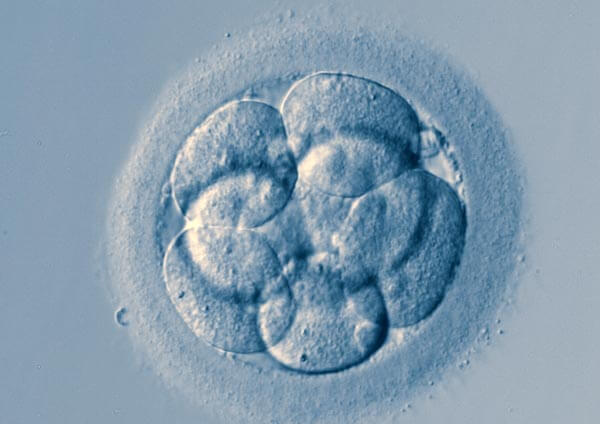
What Is the Zona Pellucida and What Is Its Function?
The zona pellucida is a layer surrounding the fertilized egg and embryo during the earliest stages of development. Its main functions are to:
- Protect the embryo.
- Allow nutrient exchange.
- Prevent premature implantation outside the uterus.
For pregnancy to occur, the embryo must break through this layer in a natural process known as embryo hatching.
Blastocyst Development and Stages of Embryo Hatching
Hatching occurs when the embryo reaches the blastocyst stage. This process is divided into several phases:
Expanded Blastocyst
The embryo has increased in size and its internal cavity has expanded, causing a progressive thinning of the zona pellucida.
Hatching Blastocyst
The embryo begins to partially emerge from the zona pellucida through a small opening.
Hatched Blastocyst
The embryo has completely emerged from the zona pellucida and is ready to begin implantation into the endometrium.
When Is Assisted Hatching Recommended?
It is not a routine technique, but rather a personalised indication based on medical history and embryo characteristics. Assisted hatching may be recommended in specific situations, such as:

Repeated implantation failure.

Embryos with a thickened zona pellucida.

Frozen embryo transfer cycles (vitrified embryos).

Advanced maternal reproductive age.
Selected cases following individualised medical assessment.
How Is Assisted Hatching Performed?
Assisted hatching is performed in the embryology laboratory, usually using a laser-based technique, which is both precise and safe.
The embryologist creates a small opening or controlled thinning in the zona pellucida without damaging the embryo.
This procedure is carried out shortly before embryo transfer and is not invasive for the patient.
What Is Assisted Hatching Used For?
Assisted hatching is used to support embryo hatching when the zona pellucida is suspected to be thicker or more rigid, potentially making the natural process more difficult.
By helping the embryo emerge from this protective layer, the aim is to improve implantation chances in selected cases.
How Does Natural Embryo Hatching Occur?
As the embryo develops, it gradually increases in size. This growth causes the zona pellucida to progressively thin, until it eventually breaks, allowing the embryo to emerge and implant into the uterine endometrium. When this process does not occur properly, implantation may be more difficult.
Book Your Consultation
At GAIA Fertility Clinic, we understand assisted hatching as a complementary tool within assisted reproduction treatment, not as a universal solution. Our team carefully evaluates each case to determine whether this technique may provide a real clinical benefit, always respecting embryo development and each patient’s individual reproductive journey.
At GAIA Fertility Clinic, we understand assisted hatching as a complementary tool within assisted reproduction treatment, not as a universal solution. Our team carefully evaluates each case to determine whether this technique may provide a real clinical benefit, always respecting embryo development and each patient’s individual reproductive journey.